Flat Roof Repair: When Repairs Make Sense
Flat roofs get a reputation for being “simple,” mainly because they do not look steep from the ground. In the field, though, flat means different things to different roof types and different climates. A flat roof is still a roofing system with layers, fasteners, adhesives, seams, flashings, drains, and a way to handle water movement when the weather turns. When something goes wrong, the question is rarely “can we patch this?” The real question is “will a patch solve the underlying problem, and for how long?”
I have walked enough flat roofs to know how quickly a small leak can turn into a bigger bill. Not because repairs never work, but because flat-roof failures often have a pattern: water finds a path at a seam or flashing, travels under the surface, and damages materials and substrate in a way you cannot see from above. A good repair plan starts with a real roof inspection, not just chasing the visible wet spot. The best contractors treat repair and roof replacement as two tools, and they choose based on the roof’s age, the extent of damage, the likelihood of hidden issues, and the hazard that caused the damage in the first place.
Why “flat” doesn’t mean “low risk”
With a pitched roof, gravity helps move water along the surface. With a flat roof, gravity has a different job. Water has to move across the roof membrane and toward drains, and it depends on the roof having correct slope and a properly maintained drainage plan. Even if a roof looks flat, it is rarely truly level everywhere. Small deviations can matter, especially around penetrations like vents, pipes, and HVAC equipment curbs.
The other difference with flat roofs is layer interaction. Many flat systems are built as multiple layers over time, with a membrane and additional components designed to work as a system. When a repair targets only one exposed surface, it can interrupt how those layers seal together. If the leak is caused by a degraded flashing detail, for example, a membrane patch placed nearby may stop the immediate drip, but not the water intrusion that is running along a joint or seam.
That is why inspection matters. A manufacturer and industry guidance for roof damage consistently emphasizes that homeowners should use professionals to decide whether repair or replacement makes sense. The judgment call is usually not aesthetic, and it is rarely based on a single observation. It is based on patterns.
The repair vs. Replacement decision is about pattern, not just holes
A useful rule of thumb is simple: small, isolated problems can often be repaired, while older roofs, widespread damage, recurring leaks, or multiple trouble spots may justify replacement. That principle comes up again and again because it matches what contractors see when they lift a membrane or remove flashing.
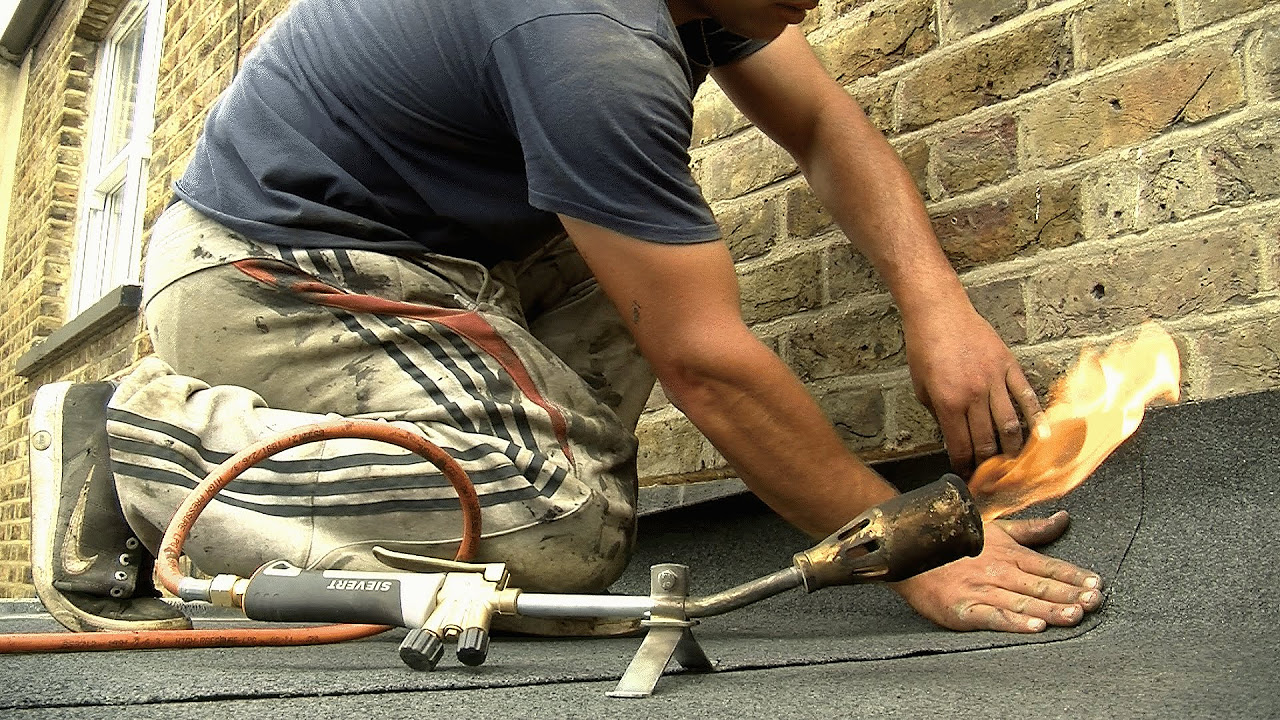
In practice, “isolated” and “widespread” are not just words. Is the damage limited to a single penetration where a boot has failed? Or are you seeing separate wet areas in different parts of the roof, each one hinting that the system has lost integrity in more than one location? Are you dealing with a roof that has already had repeated emergency roof repair calls? Flat roofs can be patched several times, but multiple repairs can be a sign that the membrane and details are generally aging rather than failing in one contained spot.
There is also a version of the decision that is driven by what happened to the roof. Storm damage changes the repair conversation. Fire damage and structural distortion can make replacement the responsible call, because even if the membrane surface looks intact, the support and alignment that make the roof perform as designed may be compromised.
Signs that repairs usually make sense
Repair often makes the most sense when the roof is otherwise performing well and the damage is limited in scope. Here are situations where a contractor typically can address the problem without immediately moving to a full replacement, assuming the inspection confirms the roof is not hiding larger issues.
- The problem appears isolated, such as a roof leak repair need centered on one penetration, one flashing detail, or one localized seam.
- The roof is not significantly aged, and the surrounding membrane and layers look stable once opened for inspection.
- There is no repeating leak history, meaning the same area has not been patched multiple times with persistent recurrence.
- The damage is consistent with a fixable detail failure rather than broad system degradation.
- After emergency roof repair, the leak path is understood and corrected, not just temporarily covered.
I am describing the “usually” category because flat roofs can surprise you. Two penetrations can look similar from the ceiling below, but one might have a failed seal at the flashing while the other has water tracking from a seam under a membrane lap. In those cases, what looks like a simple patch becomes a more involved repair that may include multiple components.
Signs that replacement is often the smarter call
Replacement is not automatically the expensive or pessimistic option. It is often the option that prevents the next emergency call, especially when the roof has reached a stage where repair becomes a cycle.
- The roof is older, or it shows multiple trouble spots across different zones.
- Leaks are recurring, especially when the same system area keeps failing after repairs.
- The damage is widespread enough that localized work would mean leaving compromised layers and details in place.
- The event involved forces that could affect more than just the membrane surface, such as fire, hail, wind, or structural distortion.
- Roof inspection reveals broader deterioration than what a visible stain on the ceiling would suggest.
A contractor’s job is to interpret that evidence. Roof replacement evaluation after a leak often includes opening up suspect areas so you can see the real condition of the layers and the substrate. That is how you avoid the trap of “patching the symptom” and then paying for it later.
A quick look at what a thorough roof inspection actually covers
Even if you have owned a home for years and you know every vent on your roof by name, flat roof inspection is still a specialized task. A professional roof inspection aims to identify the leak path and the condition of surrounding materials. It also tries to determine whether the issue is a one-time failure or part of a larger aging pattern.
For flat roofs, that usually means taking a close look at:
Edges and perimeters where water can sit longer than you expect. Flashing details around penetrations and transitions. Areas near drains where debris or maintenance issues can lead to ponding conditions. Any visible signs of membrane separation, cracking, or damaged seams.
When the contractor comes back with repair recommendations, the best explanations connect what they saw to what they believe caused it. If the recommendation is only “patch here” without any reasoning tied to the leak path, ask more questions. A reputable company should be able to explain why that repair approach will hold, what it will protect, and what it will not.
Emergency roof repair: what to expect and what to watch for
When water gets into a building, the immediate goal is containment and protection of interior materials. Emergency roof repair is about stopping further damage. It is not always about building the final, long-term solution on the first day, and that matters for your expectations.
I have seen the difference clearly: emergency work can look like a temporary barrier, while the permanent fix comes after the contractor can inspect the area properly, confirm what failed, and address any affected layers. That process is also consistent with how guidance treats post-event evaluation. After an event, the roof may have enough damage that repair is preferable in some cases, but the contractor needs to inspect the roof condition to make that call.
The practical advice here is straightforward. After emergency roof repair, watch for the same symptom returning. If a leak reappears quickly in the same area, it often indicates that the initial fix did not address the full leak path. If you see new stains forming elsewhere, that can indicate broader issues and may shift the recommendation toward roof replacement.
Flat roof repair by roof type, in plain language
Flat roofs come in different systems, and the repair conversation depends on what you have. A patch that makes sense on one type may not be appropriate on another if you are dealing with different membrane behaviors, seam construction, or surface coatings.
The keywords people use for roof types usually reflect categories the roofing industry recognizes, like TPO Roofing Installation and EPDM Commercial Roofing for membrane systems, or Modified Bitumen Roofing as a different approach to low-slope construction. There are also systems associated with PVC roofing and other commercial low-slope solutions. Metal roofing is a different family of roof materials, and while “flat roof repair” often brings TPO and EPDM to mind, commercial metal roofing and metal roof installation and repair are still common in certain building types.
The key point is https://newarkqualityroofing.com/commercial-roof-replacement-newark-nj this: roof repairs are system-specific. A contractor may offer repair or replacement options, but the “how” depends on the existing materials and their condition. If you are considering Roof Replacement After Leak, for instance, the contractor’s evaluation should address whether you can restore the roof with repairs that match the system, or whether the roof has reached a stage where Flat Roof Replacement is the more reliable route.
Age is more than a number, but it does matter
Age influences material integrity, but it can also influence feasibility. Inspections often reveal that older systems are more likely to have multiple weak points and areas where the substrate and details are no longer in great shape.
On the residential side, asphalt shingle roofs have an expected service life often described as about 20 to 30 years, including architectural shingles as a premium laminated type of asphalt shingle. That does not automatically apply to flat roofs, because flat roofs are usually different systems, but the underlying lesson carries over. Materials age, and systems that have reached the end of their expected life are more likely to justify Roof Replacement rather than repeated Roof Repair.
For commercial buildings, the principle is the same even when the roof material category changes. The roof can still develop widespread issues, and fire, hail, wind, or structural distortion can change whether repair is feasible. That is why IBHS guidance emphasizes post-event evaluation to identify whether repair is preferable to full replacement.
What repairs can include, and why “patching” may not be the whole story
A common misconception is that “repair” means putting new material over an old leak spot. In real projects, repair often includes replacing or restoring flashings, reworking seams, and ensuring the repair is tied into surrounding details correctly.
A typical roof replacement includes removing old roofing materials, installing new underlayment and roofing materials, replacing flashings and ridge caps, and cleaning up the site. The reason I mention that is not to compare scope one-to-one, but to show the level of component work that goes into a full solution. If a contractor is recommending repair instead of roof replacement, you should still expect them to address the same kinds of critical components, but in a smaller footprint and with careful attention to transitions.
That means the best repair plans usually do more than cover a visible opening. They correct the underlying system failure. If the leak is caused by a failing flashing around a penetration, the repair likely includes new flashing work. If the seam has opened or the membrane has separated at a lap, the repair likely includes restoring that seam properly, not just sealing over the top.
When the leak is “fixed” but the building still feels wet
Sometimes the leak seems resolved, but the interior tells a different story. Wet drywall, damp insulation, and musty odor can continue after the roof has stopped letting in water. That is not a reason to rush into Roof Replacement by default, but it is a reason to coordinate roof repair with building remediation decisions.
This is also why a good contractor communicates what they did and what they observed. If they believe they have stopped water intrusion, they can explain what to look for and when. If they suspect hidden damage, they should say so. Repair decisions should be tied to reality, not guesswork.
How cost thinking should work for roof repair and roof replacement
People understandably start with Roof Replacement Cost and the difference between repair and replacement budgets. But with flat roofs, cost discussions are safest when they include risk and recurrence, not just the first invoice.
GAF reported an average 2023 roof replacement cost of $14,959 for an asphalt shingle roof. Real projects vary by roof size, materials, and complexity, but that number is useful as a reality check for why homeowners often want to avoid replacement unless it is justified.
Still, flat roof repair can be a smarter cost strategy when the roof is otherwise healthy. If the inspection shows an isolated Roof Leak Repair need, repairing can stop interior damage and extend service life. If the inspection shows broad deterioration, multiple trouble spots, or recurring leaks, repeated emergency work can end up costing more than you expected, both in dollars and in stress.
For commercial properties, the trade-offs are similar, but the scale and consequences can be bigger. Commercial Roof Repair and Commercial Roof Installation planning often includes minimizing downtime and maintaining building operations. That can make repair attractive early on, but the roof inspection has to confirm that repair will not be merely “delaying the inevitable.”
Residential vs. Commercial: the judgment call still has to fit the building
Flat roofs appear on both residential and commercial buildings, but the decision process differs in how maintenance is handled and how damage impacts the structure.
On residential properties, you might be dealing with Residential Roof Installation and Flat Roof Installation and Repair decisions where the roof type and exterior details determine how water paths develop. On commercial properties, roof systems like TPO Roofing Installation, EPDM Commercial Roofing, PVC Roofing, Modified Bitumen Roofing, and Commercial Metal Roofing are common categories. Commercial Roof Repair and Commercial Roof Replacement can also be driven by liability, tenant needs, and how quickly the building needs to reopen safely.
In both cases, the contractor’s experience with roof systems matters. The same leak complaint can lead to different repair scopes depending on whether the building uses EPDM, TPO, PVC, or another low-slope system. You do not want a one-size-fits-all patch approach. You want a professional who can match repair methods to the installed roof type and its condition.
Fire, wind, hail, and why the cause changes the repair plan
Damage from storms and other hazards can be misleading. Some roof damage looks superficial, but underlying problems can exist where materials were stressed or where components shifted. Fire damage can also be deceptive because a roof surface might not look destroyed while the layers underneath are weakened.
IBHS guidance highlights that properly designed, installed, and maintained roofs can reduce damage from hazards like wind, rain, hail, ice, snow, and fire, and that post-event evaluation can identify cases where repair is preferable to full replacement. That is the reason a professional should inspect the roof after a significant event, even when the leak seems small.
If your contractor recommends repair after an event, ask what they found that supports that decision. If they recommend replacement after an event, ask how they determined repair would not be reliable. Either recommendation should be grounded in inspection observations, not just preference.
Practical questions to ask during your roof repair or replacement conversation
A good contractor welcomes questions, because it signals that you want clarity, not sales pressure. Here are questions that typically bring the best answers without turning the visit into an interrogation.
What did you find that explains the leak path, and what materials were affected? Is the problem isolated or part of multiple trouble spots? After repairs, how will you verify the roof is watertight, and what will you monitor? Does the existing roof show aging signs that could make future leaks likely? If we repair, how does that choice compare to Flat Roof Replacement in reliability and risk?
If you hear vague answers like “we’ll patch it and see,” that is a red flag. If you hear specific reasoning tied to what the inspection revealed, that is a green flag.
Bringing it home: when you should push for repair, and when you should push for replacement
Flat Roof Repair can be the right move when the damage is isolated, the roof is not severely aged, and the inspection indicates the leak path can be corrected without leaving multiple compromised Commercial Roof Replacement areas behind. Repair can also be the smart path when you are dealing with a straightforward Roof Leak Repair need that does not show a pattern of recurrence.
Flat Roof Replacement is worth seriously considering when the roof is older, the damage is widespread, leaks recur, and the inspection reveals more than one failure zone. It is also often the responsible choice when the event involved fire, structural distortion, or other forces that could affect how the roof system performs, not just how it looks on the surface.
If you have already paid for Emergency Roof Repair more than once, that is a sign worth taking seriously. Repeated fixes can indicate that the roof system has moved past the “isolated problem” stage. At that point, a measured plan for Roof Replacement can actually be the lower-stress decision, even if it feels bigger in the short term. And if cost is your main constraint, ask the contractor to explain the reliability trade-offs. A roof is not a consumable. It is a long-term building component, and the best decisions respect that.
In the end, a repair recommendation should read like a confident plan, not a temporary guess. A replacement recommendation should feel justified, not dramatic. When the choice is made with a real Roof Inspection and an honest look at the roof’s condition, you can move forward with your eyes open, knowing whether Roof Repair will likely hold or whether Roof Replacement is the safer long-term bet.